
Bearing Selection
ZZ vs RS: Which One Should You Choose
Open, ZZ or 2RS? Compare bearing seals and shields and choose the right closure for your application.
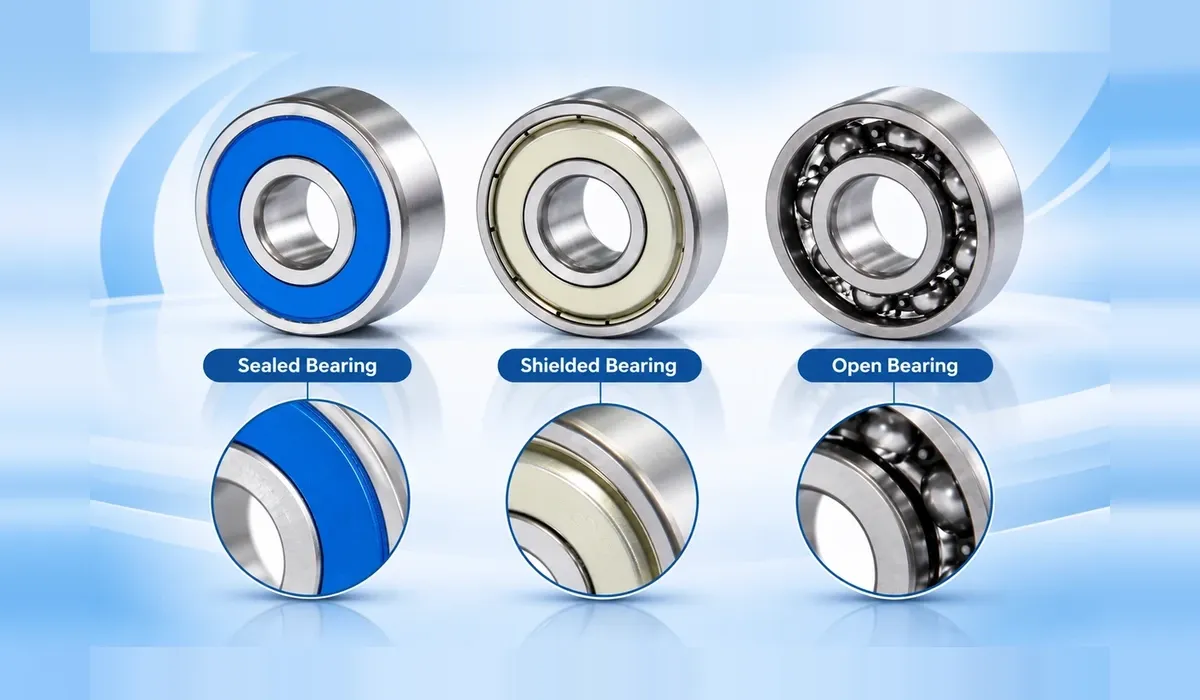
ZZ vs RS: Which One Should You Choose
Bearings need more than load-carrying capacity to operate reliably. They also need proper lubrication and protection against dust, water and other contaminants. For deep groove ball bearings, the sealing arrangement is an important factor affecting operating conditions, friction and maintenance requirements. Depending on the application, bearings may be supplied with an open design, metal shields or rubber seals.
What are the differences between these designs, and how should the right one be selected?
Why Do Bearings Need Seals and Shields?
Bearings usually rely on grease or oil to reduce friction and wear between the rolling elements and raceways. If dust, metal particles or moisture enter the bearing, they can contaminate the lubricant and accelerate wear.
At the same time, lubricant may gradually escape from the bearing during operation. A suitable sealing arrangement helps retain the lubricant and limits the entry of external contaminants.
When selecting a bearing closure, dust and water protection are not the only considerations. Operating speed, friction torque, temperature and the working environment also need to be taken into account.
Common Types of Bearing Seals and Shields
Deep groove ball bearings are commonly available in the following designs.
Open
Open bearings have no shields or seals on either side. The rolling elements and internal lubricant are exposed to the surrounding environment.
This design is suitable for applications where the bearing is protected by the equipment housing or another external arrangement. Open bearings can also be used where the lubrication method is determined by the equipment design.
ZZ (Metal Shielded)
Metal shields are fitted to one or both sides of a bearing. Common designations include Z and ZZ, although suffixes may vary between manufacturers.
The shield normally maintains a small clearance from the inner ring rather than making direct contact. This results in relatively low friction and makes shielded bearings suitable for applications where running resistance and speed are important considerations.
Metal shields help prevent larger particles and dust from entering the bearing. However, they should not be treated as a fully waterproof sealing solution.
RS (Contact Seals)
Contact seals are generally made from rubber or other flexible sealing materials. The sealing lip makes direct contact with the inner ring surface to create a tighter barrier.
This arrangement usually provides better protection against contaminants than a metal shield. It is often used in applications where the bearing may be exposed to dust, water droplets or other external contaminants.
Because the sealing lip contacts the inner ring, additional friction is generated during operation. This needs to be considered when evaluating operating speed, friction torque and temperature.
Comparison table of different Seal Types
Different closure designs offer different levels of protection and operating performance.
The table below provides a general comparison of commonly used bearing designs. Actual performance depends on the seal geometry, materials, manufacturer and operating conditions.
How to Select the Right Bearing Closure
The right choice depends on the actual operating environment and equipment requirements. A higher level of sealing is not necessarily the best solution for every application.
Operating Environment
For bearings installed inside relatively clean equipment with adequate external protection, an open or metal-shielded design may be sufficient.
Where dust, particles or moisture are present, a more protective sealing arrangement may be required.
Operating Speed
For high-speed applications, friction and heat generated by the sealing arrangement need particular attention.
Metal shields and non-contact seals generally produce less friction, while contact seals require careful consideration of their speed limits and operating temperature.
Operating Temperature
Different sealing materials have different temperature capabilities. In addition to the bearing's operating temperature, the performance of the grease and sealing material must also be considered.
For applications involving high or low temperatures, the suitability of the seal material should be confirmed with the manufacturer.
Grease Retention and Maintenance
For equipment designed to operate with minimal maintenance, grease retention and protection against external contamination are important factors. For bearings with seals or shields on both sides, the factory-filled grease should also be suitable for the intended operating conditions. Seals should not be removed or additional grease added without checking the manufacturer's recommendations.
There is no single closure design that suits every application. The selection should take operating environment, speed, temperature, lubrication and maintenance requirements into account to ensure the bearing meets the needs of the equipment.