
Bearing Applications
Deep Groove Ball Bearings in Electric Motors
An overview of deep groove ball bearings in electric motors, their applications and key selection factors.
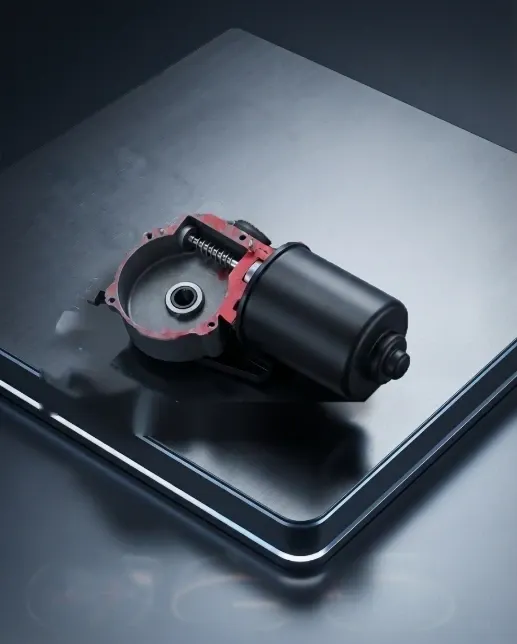
Deep Groove Ball Bearings in Electric Motors
Deep groove ball bearings are widely used in electric motors, from compact motors to many industrial designs. Their job is straightforward: they support the rotor shaft, allow it to rotate smoothly and carry the radial loads and, within their capacity, axial loads that occur during operation. Why are they so common in motor applications, and what should be considered when selecting them?
What Do Deep Groove Ball Bearings Do in a Motor?
The rotor must remain properly supported as it turns inside the motor. Bearings are fitted at the shaft support positions to guide the shaft and maintain its position relative to the motor structure.
In a typical motor arrangement, deep groove ball bearings may:
- Support the rotor shaft and provide a stable running position.
- Carry radial loads, including the rotor's weight and loads generated during operation.
- Accommodate axial loads in both directions, provided they remain within the bearing's design limits.
- Contribute to smooth operation through their relatively low friction and suitable running characteristics.
These features make deep groove ball bearings a practical choice for many general-purpose motors. Where axial loads are high or operating conditions are unusual, the bearing type and arrangement need to be assessed against the actual motor design.
Which Motors Use Deep Groove Ball Bearings?
Deep groove ball bearings are found in a range of motor designs. Common applications include:
- Small motors used in compact drives and electrical equipment.
- Brushless DC motors (BLDC motors), including those used in fans, power tools and other compact drive systems.
- Some servo motors, where they support the motor shaft as part of the bearing arrangement.
- Stepper motors, where they provide support for the rotating shaft during operation and positioning.
- Industrial motors used in pumps, fans, conveyors and other driven equipment.
This does not mean that every motor in these categories uses the same bearing arrangement. The choice depends on the motor's construction, loads, speed and operating requirements.
What Should Be Considered for Motor Applications?
A motor bearing needs to suit the conditions in which the motor will run. In addition to load capacity, several practical points should be considered.
Noise and vibration
Bearing quality, running accuracy, internal condition and installation all have a bearing on motor noise and vibration. These factors are often particularly important in small motors and household appliances.
Speed and lubrication
The bearing and its lubrication need to be suitable for the motor's operating speed and temperature. Grease type, fill quantity and working temperature can all affect bearing performance.
Sealing and contamination protection
Depending on the operating environment and the need to retain lubricant, a motor may use open bearings, bearings with metal shields, or bearings with seals. Metal shields help limit the entry of contaminants, while seals generally provide a higher level of protection. The actual protection depends on the design, and contact seals may add friction. Selection should take speed, temperature and the surrounding environment into account.
Operating temperature and internal clearance
Heat generated during motor operation can cause the shaft, bearing and housing to expand. The required internal clearance therefore depends on factors such as fits, operating temperature and the actual duty. There is no single clearance class that suits every motor.
Deep groove ball bearings are a common choice in electric motors because of their straightforward design, relatively low friction and ability to carry radial loads as well as limited axial loads in both directions. The right selection still depends on the motor type, speed, loading, noise requirements, lubrication and operating environment. Matching the bearing to these conditions helps the motor run reliably and meet its expected service-life requirements.